Mirdif 2026: where Dubai families go when they want space, not glass
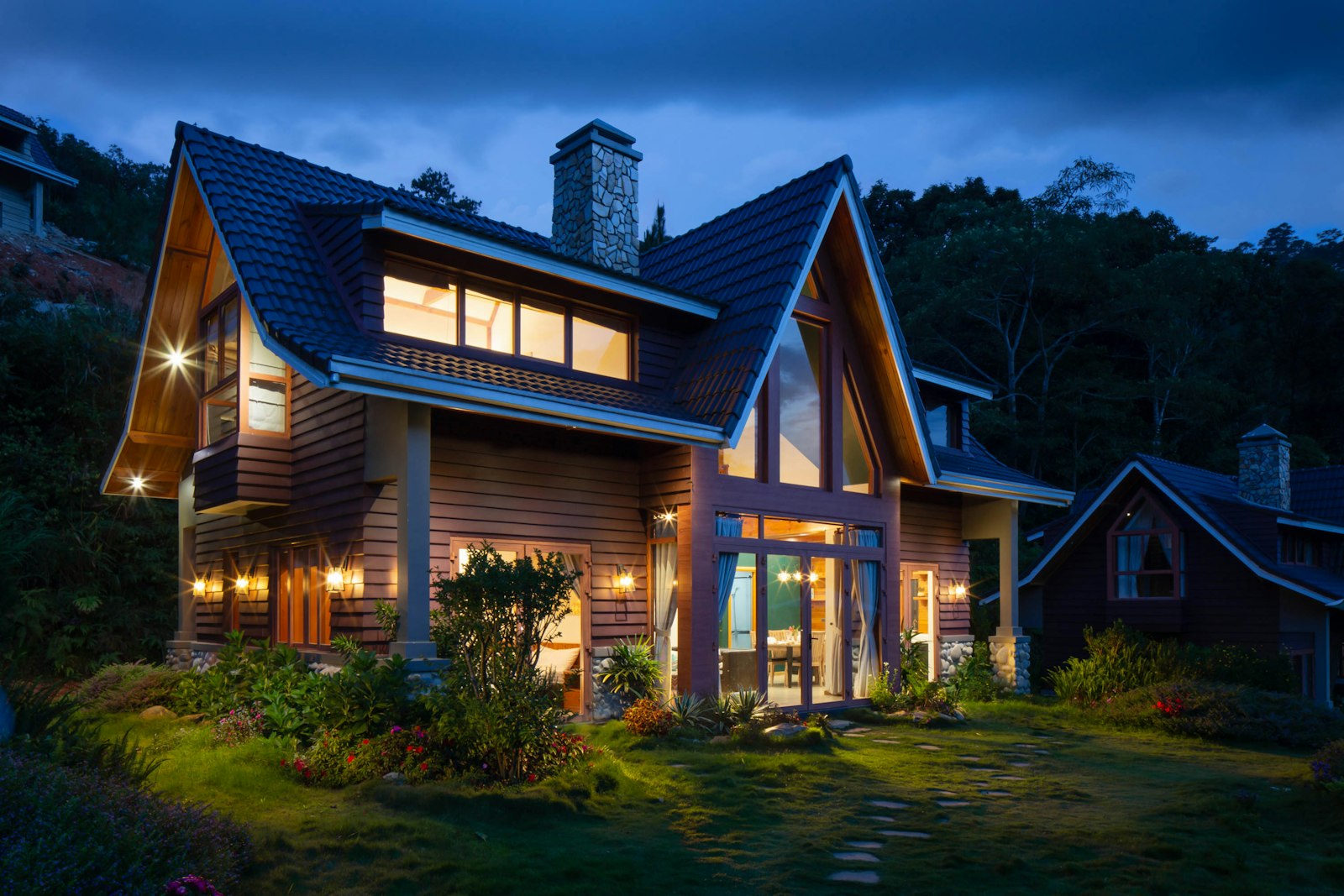
Mirdif is the Dubai community that almost nobody on Property Finder ever rates as a top pick — and yet it has been quietly full of British, Indian and Emirati families for thirty years. There is a reason for that.
Most of Dubai's marketing energy goes to the freehold strip running from Marina down to Bluewaters and back up to Downtown. Mirdif sits on the other side of the airport. It is older, lower-rise, mostly leasehold in the original sections, and quietly the largest established family district in the city.
This guide explains how Mirdif is structured in 2026, what the villas and townhouses actually cost, where the freehold pockets are, and which sub-communities families argue about.
What Mirdif actually is
Mirdif is split into four working segments. The original Mirdif, north of Tripoli Street, is mostly Emirati-built independent villas on large plots. Some are owner-occupied, many are subdivided and rented as individual units. This is the part of Mirdif most people see when they first drive in. The streets are quiet, the houses sit far apart, and the construction quality is mixed.
Uptown Mirdif, completed by Union Properties, sits on the southern edge near Algeria Street. It is a master-planned village of townhouses around a central retail spine, with Uptown School inside the community boundary. The product is consistent and the streets look planned.
Mirdif Hills, by Dubai Investments, is the newest piece. Three phases of mid-rise apartments and townhouses, with retail and the Mirdif Hills Mall opening between 2021 and 2024. This is the freehold portion that most foreign buyers focus on. The product is a 2020s build standard, the elevators work, the parking is sensible.
Mirdif Tulip and the various Ghoroob and Shorooq compounds are leasehold rental compounds. They are owned by a single entity and rented out as managed communities — mainly families on three to five year contracts. These are not for sale, but they shape the rental dynamics of the wider area.
Pricing in 2026
A three-bedroom Uptown Mirdif townhouse is priced between AED 2.8 million and AED 3.6 million depending on position and condition. A four-bedroom Uptown townhouse trades between AED 3.6 million and AED 4.6 million. A semi-detached five-bedroom is rare and clears AED 5.1 million when one appears.
In Mirdif Hills, a one-bedroom apartment is priced between AED 1.05 million and AED 1.35 million. A two-bedroom is between AED 1.5 million and AED 2.1 million. The three-bedroom townhouses sit between AED 3.4 million and AED 4.4 million. The standout product is the Janayen Avenue retail-spine apartments, which trade at a premium of about eight to twelve per cent over comparable Hills inventory because of the integrated mall access.
Independent villas in original Mirdif are a different market. Most are leasehold on Emirati-owned plots and trade in the rental market only. Where freehold sub-plots exist, four and five-bedroom standalones change hands between AED 3.2 million and AED 6.8 million, with the upper end being recently built or fully renovated units on larger lots.
The freehold question
This is the question that determines whether Mirdif is even on a buyer's list. Most of original Mirdif is GCC freehold only, which means foreign buyers cannot purchase. Uptown Mirdif is freehold for the townhouses and is open to all nationalities. Mirdif Hills is full freehold across all three phases.
Non-GCC buyers should think of Mirdif as two communities — Uptown and Hills — that happen to share a postcode with the older leasehold area. Everything written about pricing, school commutes and rental yield should be filtered through that lens.
Who lives here
Mirdif is the only Dubai community where you will routinely find three-generation Emirati households on the same street as a British family of four and an Indian family of five. The mix is unusual and consistent. Long-tenure expats — five, ten, fifteen years — are more common here than in any other freehold-friendly Dubai community except Springs and Meadows.
The other group worth noting is the cabin crew and pilot population. Mirdif's proximity to Dubai International Airport, ten to fifteen minutes from terminals 1 and 3, makes it the default airline-staff postcode along with Garhoud and Festival City. Emirates, Etihad and Qatar Airways staff make up a meaningful slice of the rental market.
What you actually own
In Uptown Mirdif and Mirdif Hills, the title deed is freehold. Foreign nationals can own in their own name. Service charges are billed on built-up area, twice a year. Uptown Mirdif is managed by Union Properties Asset Management. Mirdif Hills is managed by Dubai Investments through a community management subsidiary.
Uptown Mirdif service charges sit at AED 3.40 to AED 3.95 per sq ft in 2026. For a typical four-bedroom townhouse at around 3,000 square feet, that's AED 10,200 to AED 11,900 a year.
Mirdif Hills charges run higher because the towers carry chillers, lift maintenance and a larger amenity footprint. The current band is AED 14.50 to AED 18.50 per sq ft for apartments and AED 5.20 to AED 6.10 per sq ft for the townhouses. For a typical two-bedroom apartment at around 1,250 square feet, the yearly bill is AED 18,000 to AED 23,000.
Schools and daily life
Mirdif's school inventory is the reason families with primary-age children buy here. Uptown School and GEMS Royal Dubai are inside the community boundary. Mirdif American School is a five-minute drive. Star International Mirdif is on the same loop. Repton Foxhill is fifteen minutes by Al Awir Road. For senior years, families typically choose between Royal Dubai for British curriculum, Mirdif American for American, or the longer commute to Repton.
The retail picture is dominated by Mirdif City Centre, the Majid Al Futtaim mall on Sheikh Mohammed Bin Zayed Road. It is one of Dubai's largest malls outside the central strip and handles the weekly Carrefour run, cinema, dining and a Magic Planet for school holidays. Mirdif Hills Mall, smaller and newer, covers the daily shop, pharmacy and casual dining. Uptown Mirdif has its own community retail centre with a Spinneys.
Road access is the unsung Mirdif feature. Sheikh Mohammed Bin Zayed Road runs along the southern edge. Al Khawaneej Road runs along the eastern edge. The airport is ten minutes. Downtown is twenty-two minutes in light traffic, thirty-five in rush. Sharjah is fifteen minutes if you need to cross the border for work.
The rental market
A two-bedroom Mirdif Hills apartment rents between AED 95,000 and AED 130,000 a year. A three-bedroom townhouse in Uptown or Hills sits between AED 200,000 and AED 250,000. The four-bedroom Uptown townhouses rent between AED 245,000 and AED 305,000. Independent villas in original Mirdif rent between AED 180,000 and AED 360,000 depending on size, age and whether the landlord maintains the property.
Gross yields on Mirdif Hills apartments sit at six and a half to seven and a half per cent. That is the headline number that brings investors to the community. After service charges, net yields drop to four and a half to five and a half per cent — still strong for Dubai, and the highest of any 2020s-built freehold community at this price point.
Townhouse yields are lower. Gross sits at five to six per cent. Net is closer to four. The case for townhouses here is owner-occupation with optionality, not investor cash flow.
The honest pros
The school catchment is strong and varied across curricula. Road access in all four directions is excellent. The Mirdif Hills apartment yields are among the best in Dubai for a 2020s-built freehold product. Community feel is consistent and end-user occupancy is high. Construction quality in Mirdif Hills is meaningfully better than the older Mirdif stock or some of the rushed 2014 to 2018 developments elsewhere.
The community is not flashy. There are no Burj views, no marble lobbies, no infinity pools photographed for Instagram. For a meaningful share of buyers, that is the point.
The honest cons
Aircraft noise is the Mirdif issue that surprises every first-time buyer. The community sits under a major Dubai International approach path. On east-wind days, aircraft descend over Mirdif on final approach to Runway 30. The frequency depends on weather and the season. In peak winter operations, you can hear aircraft every ninety seconds during the morning bank. A 2018 runway upgrade and 2024 noise mitigation programme softened the worst of it. It did not eliminate it.
The community is less central than Marina or Downtown. If a buyer's lifestyle is Friday brunch at the Address Beach Resort and dinner at La Mer, the twenty-five minute drive each way becomes a friction point. Mirdif residents who say they love the community are usually the ones whose lives are mostly inside it.
Resale liquidity is lower than Marina or Hills Estate. Transactions happen, but the pool of buyers is smaller. A well-priced Uptown townhouse will sell in eight to twelve weeks. An overpriced one can sit for nine months.
What to inspect before you buy
Check the noise profile honestly. Sit on the terrace of the unit for thirty minutes during a morning or evening flight bank. Listen, do not just look. The difference between a north-facing balcony in Mirdif Hills Phase 3 and a south-facing balcony in Phase 1 can be meaningful in real decibels.
Get a chiller and lift inspection on Mirdif Hills apartments. The Phase 1 buildings are now five years old. A handful have had cooling capacity issues during the August peak. Service charge accounts should show the major equipment maintenance history.
For Uptown townhouses, inspect the roof and the boundary walls. The Union Properties stock has had some waterproofing issues at roof junctions, particularly the corner units. Most have been remediated. Some have not.
Confirm that the unit is actually freehold and not a leasehold subdivision of an Emirati plot mis-listed as freehold. We have seen this twice in the last eighteen months, both on the original Mirdif fringe near Uptown.
The common buyer mistakes
The first is underestimating aircraft noise. Buyers who visit on a calm afternoon and decide on the spot are sometimes shocked at the dawn flight bank. Always visit twice, ideally at 7am and 7pm, on different days.
The second is assuming all of Mirdif is freehold. Foreign buyers who fall in love with an independent villa on Algeria Street will discover at the conveyancing stage that the title is closed to non-GCC purchase. Confirm freehold status before you put down a deposit.
The third is over-paying for a Mirdif Hills unit on the assumption that yields will hold up indefinitely. The current six to seven per cent gross is partly the result of Mirdif Hills still being absorbed by the market. As supply fully stabilises through 2027, yields will compress towards five to six per cent gross. Underwrite to the lower number.
The 2026 market reality
Mirdif Hills has been the standout performer in eastern Dubai over the last two years. Prices have moved up twenty-five to thirty per cent since handover in the Phase 1 buildings. Uptown Mirdif has been steadier — up perhaps eighteen per cent over the same period — but supply is tighter because the community is fully built out.
The 2026 risk is competition from Dubai South and the new Al Khail Heights handovers. Both target a similar buyer profile at lower price points. Mirdif's defence is its school catchment and the proximity to the airport. Neither of those is matched by the alternatives.
Our base case is that Mirdif Hills apartments grow at six to eight per cent annually through 2027, with the townhouse and Uptown products slightly behind. The community is no longer underpriced relative to its fundamentals. It is fairly priced.
How to start
A serious search in Mirdif takes four to eight weeks. Mirdif Hills inventory turns over quickly — well-priced two-bedrooms sell in three to five weeks. Uptown townhouse inventory is thinner and more patient — the right unit might take two to three months to surface.
Be specific about what you are buying for. Mirdif is the community where a clear brief saves the most time. School commute, road orientation, noise tolerance and freehold status are all variables that narrow the inventory dramatically once stated.
If you want a curated view of current Mirdif Hills and Uptown inventory, including off-market units, contact our team for a private list.