Emirates Hills 2026: the AED 100 million villa club explained
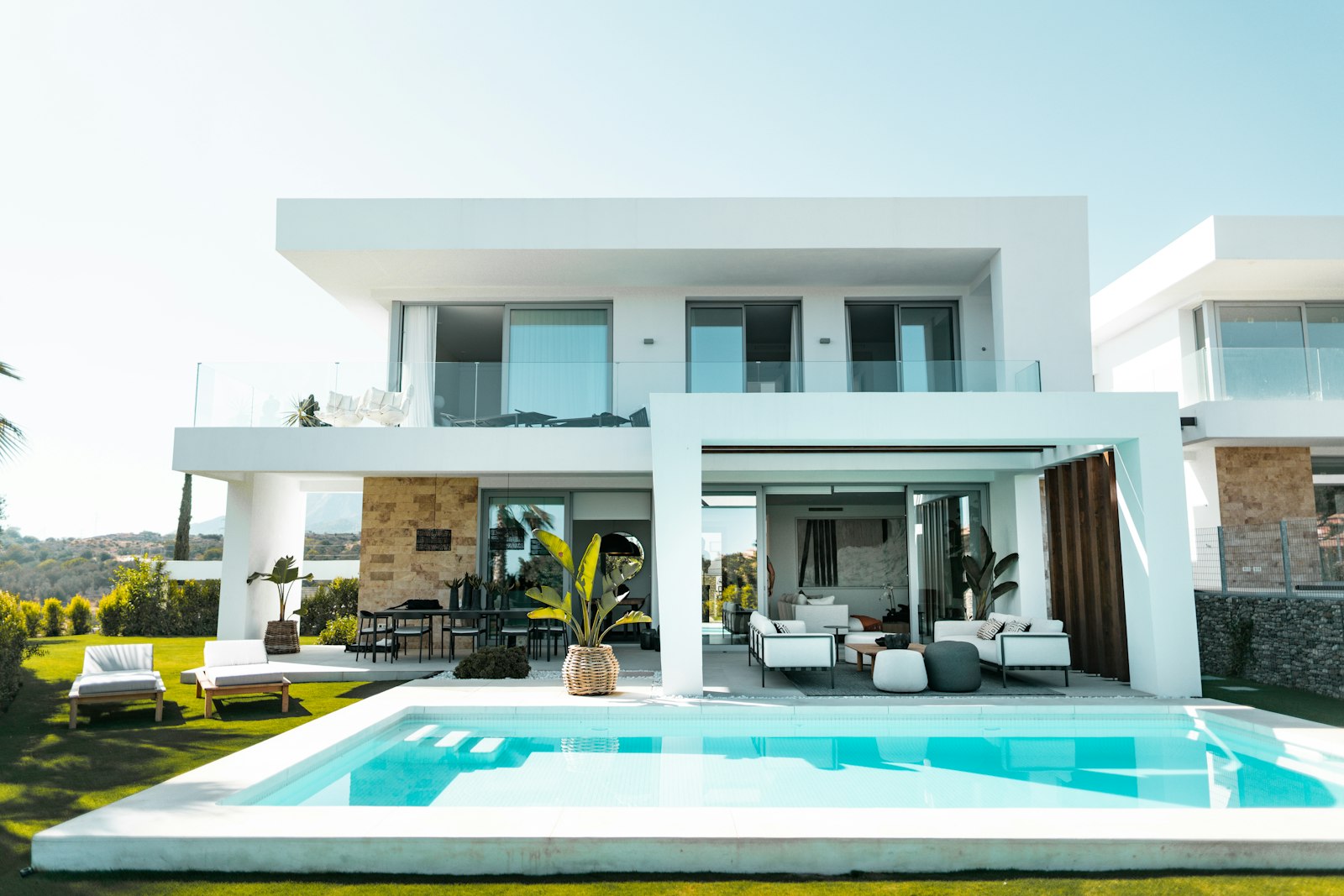
Emirates Hills does not have a sales office. It does not have show villas. It does not have a brochure. It is the only Dubai community where almost every transaction starts with a phone call to someone who already lives there, or to an agent who knows them.
This is what people mean when they call Emirates Hills the Beverly Hills of Dubai. The comparison is not about palm trees or pool size. It is about the closed network behind the gate. Roughly six hundred plots sit on a single sector north of Sheikh Zayed Road, wrapped around the Montgomerie golf course. Most have been owned by the same families for a decade or more.
The 2026 market for these villas is small, slow, and almost entirely off-market. This guide explains how the community is laid out, what the plots cost in 2026, who is actually buying, and the structural realities you should understand before you wire a deposit.
What Emirates Hills actually is
Emirates Hills is a single gated community developed by Emaar, opened in stages from 2002 onwards. It sits inside the larger Emirates Living masterplan, which also contains The Springs, The Meadows, The Lakes and The Greens. Of those, only Emirates Hills is plot-only — buyers purchased the land and built their own villas to private specifications.
The community is divided into sectors numbered E, L, V and W, with subsectors inside each. Plots range from about eight thousand square feet at the smaller end to over forty thousand square feet at the top. Built-up areas typically run between twelve thousand and forty thousand square feet, though a handful of completed mansions exceed sixty thousand.
The Montgomerie, a Colin Montgomerie-designed eighteen-hole golf course, runs through the middle. Plots that back onto fairways command the strongest premium. Plots on the larger lakes inside the community come next. Inland plots, with a view of the next villa wall, sit at the bottom of the price range.
Pricing in 2026
Vacant plots in Emirates Hills, where any still trade, are priced between AED 35 million and AED 95 million depending on size, sector and view. There are perhaps fifteen to twenty undeveloped plots remaining as of early 2026. They rarely come to market.
Completed villas span a much wider band. An older villa on a smaller inland plot, in need of full renovation, trades between AED 45 million and AED 70 million. A renovated villa on a golf-facing plot of around twenty thousand square feet typically lands between AED 100 million and AED 160 million.
The top of the market sits well above that. Several transactions in the last eighteen months on Sector W lake-front plots have closed between AED 220 million and AED 320 million. The record sale recorded by the Dubai Land Department for an Emirates Hills villa in 2025 was AED 421 million. The buyer demolished the existing structure within four months.
What this tells you: Emirates Hills is no longer a market with a single price-per-square-foot rule. Each plot is its own asset. Comps from three doors down may not apply.
Sector logic
Sector W is the most desirable. It contains the larger lake-facing plots and the longest golf frontage. Sector V is next, with strong golf views and the closest access to the King's College Dubai campus on the eastern edge. Sector L sits in the middle in both geography and price. Sector E is the largest in plot count and the most varied in quality.
Inside each sector there are corner plots that command a premium of fifteen to twenty per cent, and cul-de-sac plots that command a smaller premium for traffic reasons. Plots that face the fifteenth and eighteenth fairways of the Montgomerie are spoken of in particular as the prestige addresses inside the community.
Who actually lives here
The owner profile has shifted in the last decade, but less than people assume. In 2010, the dominant buyer was a Western European or Indian industrialist who had been in the UAE for fifteen years and wanted a trophy home. Today the buyer mix includes ultra-high-net-worth families from Russia, China, the wider Gulf region, and a growing contingent of European and American buyers who relocated for tax reasons between 2021 and 2024.
The community is overwhelmingly end-user. Tenants exist, but they are rare. The estimate from the agents who work this market most closely is that fewer than ten per cent of Emirates Hills villas are rented at any one time. Most owners treat the villa as a primary residence or as a long-stay second home.
There is no dominant nationality. There is, however, a dominant profile. Owners are typically business founders or principals rather than employed executives. They are buying with cash. The number of mortgaged transactions in Emirates Hills in any given year is in the low single digits.
What you actually own
Emirates Hills is freehold for all nationalities. The title deed records the plot and the registered built-up area. Foreign nationals can hold the title in their own name, in a UAE company name, or through a properly structured offshore vehicle.
Service charges sit in the range of AED 3 to AED 5 per sq ft per year on built-up area, with a separate master community fee covering the Emirates Living sector. For a typical twenty-thousand-square-foot villa, the annual community carrying cost lands between AED 80,000 and AED 150,000. That excludes private staff, the security detail many owners run, golf membership at the Montgomerie, and the standard utility load on a villa of this size, which is significant.
The golf membership question is a recurring source of confusion. Living in Emirates Hills does not include Montgomerie membership. Owners pay separately and there is a waiting list.
The rental market, such as it is
A six-bedroom Emirates Hills villa, fully renovated, on a decent plot, rents for AED 2.5 million to AED 4.5 million per year. Trophy properties on golf-front plots, when they appear at all, command AED 5 million to AED 9 million per year.
Rental yields are low. Gross yields hover around one and a half to two and a half per cent. After service charges, maintenance, staff and insurance, net yields are often negative. This is not an income-producing asset. Anyone buying with a rental thesis is buying the wrong community.
The buy case for Emirates Hills is capital preservation, status and resale optionality at the top of the Dubai market. Owners who bought in 2008 and 2009 have seen three to five times capital appreciation. Owners who bought between 2016 and 2019, at the bottom of the previous cycle, have done particularly well.
The honest pros
Privacy is the headline. The gate is real. The roads inside are quiet. The community has its own security perimeter beyond the standard Emirates Living gates. King's College Dubai, Dubai International Academy and Dubai British School are all within a ten-minute drive. Sheikh Zayed Road access is fast in non-rush hours.
Construction quality on the better villas is among the highest in Dubai. Because owners commissioned their own builds, the standard at the top of the market is closer to private European or American residential than to mass-developer product. Bespoke kitchens, lift cores, basement gyms and proper acoustic separation are the norm in the post-2015 builds.
Resale liquidity at the top end is steady but slow. A well-presented Emirates Hills villa, priced realistically, will sell within four to seven months. That is faster than most ultra-luxury markets globally.
The honest cons
The first issue is the variability of build quality. Because every villa was a private commission, the gap between the best and worst homes in the community is enormous. A 2007 build by an inexperienced contractor can have foundation issues, water ingress and electrical systems that need full replacement. The price tag does not always reflect the underlying condition.
The second issue is the renovation budget. A serious renovation of an older Emirates Hills villa costs AED 12 million to AED 25 million. Owners regularly underestimate this by half. The supply of contractors who can deliver this scale of work in the UAE is thin, and the timelines run twelve to twenty months.
The third issue is traffic on the school commute. Despite the proximity of the major British curriculum schools, the eastbound exit onto Hessa Street at eight in the morning can take twenty minutes from inside the gate. The Sector W villas, at the back of the community, are the worst affected.
The fourth issue is that the older villas, particularly the 2003 to 2008 vintage, are now showing their age. Pool plant, chiller infrastructure and roofing systems on these properties typically need full replacement. Sellers will often quote partial refurbishments as renovations. They are not the same thing.
What to inspect before you buy
A full Emirates Hills due diligence package has four parts. First, a structural and MEP survey by a qualified UAE engineer with experience of large detached villas. Second, a chiller and pool plant inspection, ideally during a hot week so the systems are running under load. Third, a title and permit search at the Dubai Land Department to confirm built-up area and any unpermitted extensions. Fourth, a service charge and master community ledger check to confirm there are no outstanding arrears.
The permit question matters more here than elsewhere. Because owners built their own villas, the unpermitted addition of basements, staff quarters and roof structures is common. We have seen transactions where the registered built-up area is forty per cent smaller than what is physically standing on the plot. That gap creates issues at handover and at the next resale.
The common buyer mistakes
The most common mistake is treating Emirates Hills like the rest of Dubai. Buyers who are used to off-plan launches, glossy show units and fast portal-driven transactions struggle here. The community does not work that way. The inventory list lives in private WhatsApp groups. The best plots never appear on Bayut or Property Finder. If you see an Emirates Hills villa on a public portal at an attractive price, there is usually a reason it has been sitting there.
The second mistake is anchoring to a buyer's mainland portfolio metrics. Buyers from London, Singapore or New York often arrive expecting Emirates Hills to behave like Belgravia, District 10 or the Upper East Side. The yield maths is not comparable. The transaction friction is lower. The community feel is different. Calibrating expectations early prevents a frustrated search.
The third mistake is hiring three agents in parallel. The Emirates Hills market is small enough that the same off-market plot will reach you through all three. The sellers know. The price moves up. One specialist agent, with a clear brief, is the right approach.
The 2026 market reality
Emirates Hills entered 2026 in a quieter cycle than 2023 or 2024. Transaction volume in the first quarter was down roughly thirty per cent year on year. Average plot pricing was flat. The headline records continue to come from trophy buyers at the very top, where supply is structurally constrained.
The competition for the ultra-luxury Dubai buyer has broadened. Tilal Al Ghaf, Jumeirah Bay Island, District One on Mohammed Bin Rashid City, and the new Palm Jebel Ali tip plots are all pulling money that would have gone exclusively to Emirates Hills five years ago. This is not a threat to Emirates Hills pricing in absolute terms, but it does mean the community is now one of several premium options rather than the default.
Our view is that Emirates Hills remains the most defensible ultra-luxury villa community in Dubai. The supply is finite. The plots cannot be reproduced. The buyer base is wider than it was. Capital growth from here will be slower than the last cycle, but downside risk is among the lowest in the UAE.
How to start
A serious search for an Emirates Hills villa takes between four and nine months. The good plots rarely sit on portals. Most transactions begin with a quiet introduction. Engage one specialist agent who knows the community, give them a clear brief on sector, plot size, view and budget, and let them work the network.
Be prepared to inspect quickly when the right plot surfaces. The decent inventory often closes within six weeks of being shown. Have your funds in the UAE, your engineer briefed, and your conveyancing lawyer on retainer before you start looking, not after.
If you want a curated view of current Emirates Hills inventory, including off-market plots and villas not advertised publicly, contact our team for a private list.