Emaar, Damac and Meraas in 2026: which developer actually delivers
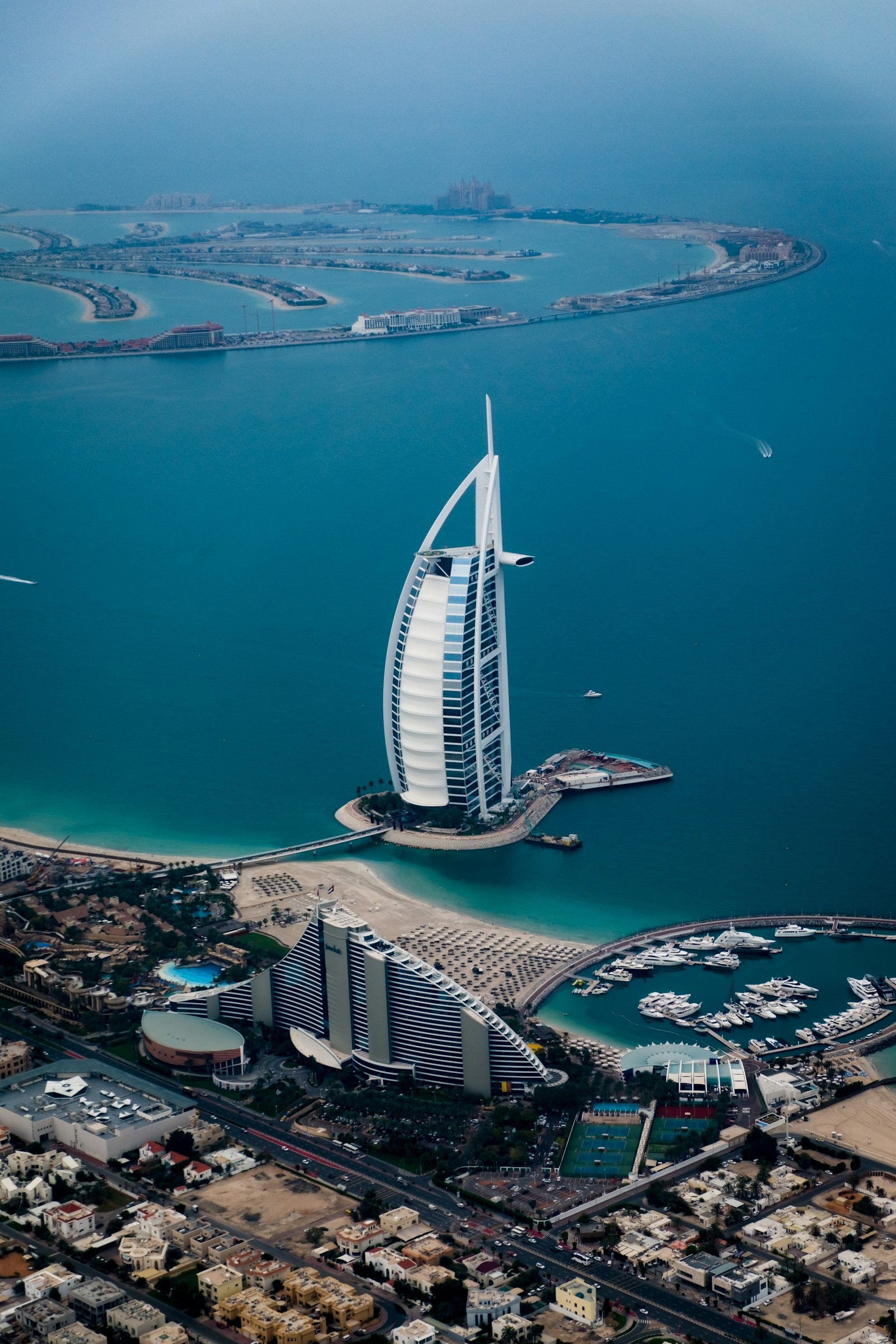
Buying off-plan in Dubai is, more than anything, a bet on the developer. The brochure looks the same in every sales suite. What separates a good buy from a painful one is who is building it, and how they have treated buyers across the last fifteen years.
Three names dominate the conversation. Emaar built modern Dubai's spine — Downtown, Dubai Hills, Arabian Ranches, Dubai Marina, much of Dubai Creek Harbour. Damac built the volume — the Hills, Lagoons, Akoya — and a long string of branded towers. Meraas, the Dubai-government-owned developer, built the curated lifestyle precincts: City Walk, Bluewaters, La Mer, Bulgari Residences.
This guide compares them on the things that actually decide whether your purchase pays off: handover timing, finish quality, service charge trajectory, resale performance, and how each one behaves when something goes wrong.
Why this comparison matters in 2026
Dubai's off-plan market accounted for roughly fifty-eight per cent of total transaction volume in 2025. That is up from forty-nine per cent in 2022. More buyers than ever are committing capital to units that don't yet exist, on the strength of a payment plan and a 3D render.
The developer track record is the single most underweighted variable in those decisions. Buyers will spend an hour studying a floor plan and ten minutes asking who built the developer's last three projects. The order of those two enquiries is inverted.
Emaar: the baseline most others are measured against
Emaar is a publicly listed company majority-owned by Dubai Holding. Its scale, transparency and project history make it the most predictable of the three on almost every metric.
On handover timing, Emaar's recent track record is genuinely strong. Of its last twenty-five completed projects, twenty-one delivered within three months of the contractual handover date, and the longest delay was around eleven months on a Beachfront tower affected by foundation re-engineering. That is, by Dubai standards, exceptional.
On finish quality, Emaar runs at an upper-mid level rather than a luxury level. The kitchens and bathrooms are well-specced but not custom. The cabinet finishes are durable but not premium. Where Emaar genuinely outperforms is in the integration with master communities: the schools, retail, parks and roads usually arrive on schedule alongside the apartments. The result is a community that functions on day one of handover, not three years later.
On service charges, Emaar properties tend to settle in a predictable band. Apartments in Downtown and Dubai Marina run AED 16 to AED 22 per sq ft per year. Villas in Arabian Ranches and Dubai Hills sit between AED 3 and AED 6 per sq ft. The increases over the first five years are usually modest — five to ten per cent cumulative — which is rare in the market.
On resale, Emaar units consistently command a brand premium of five to twelve per cent over equivalent product from less established developers, holding view, floor and finish constant. That premium has been stable for a decade.
Damac: high volume, variable execution
Damac is the second-largest developer by closed transactions and operates a substantially different model. The product mix runs from genuinely premium — Damac Hills villas, the Cavalli-branded towers — to volume-driven schemes in the southern corridor and Damac Lagoons. The variability between projects is real.
On handover timing, Damac's record is mixed. Some projects, notably newer towers in Business Bay and the Trump-branded golf villas, delivered close to schedule. Others, including parts of Akoya Oxygen and several Damac Hills phases, have experienced delays of twelve to twenty-four months from the original handover date. The completion still happens; the timing is less reliable than Emaar.
On finish quality, the picture is genuinely two-tier. Damac's branded residences — Cavalli, Versace Home, Just Cavalli — deliver a finish level that compares favourably with any developer in the region. The mid-market Damac product is more variable. Some buyers report excellent build quality; others note shortcuts on plumbing, lift maintenance and balcony detailing. The brand alone is not the signal. The specific project and its general contractor are.
On service charges, Damac runs higher than Emaar on equivalent product, often by twenty to thirty-five per cent. A villa community where Emaar charges AED 4 per sq ft, Damac is typically at AED 5.50 to AED 6.50. The increases also tend to be more aggressive in the first three to five years after handover, as the developer-controlled OA hands across to a more contested governance structure.
On resale, Damac product holds its value well in the strongest sub-markets — particularly Damac Hills and the Cavalli towers — and less well in the more peripheral developments. The brand discount, if there is one, is project-specific rather than universal.
Meraas: smaller portfolio, premium positioning
Meraas is owned by Dubai Holding and operates as the government's lifestyle-and-destination developer. The portfolio is smaller and more curated than either Emaar or Damac. City Walk, La Mer, Bluewaters, Port de La Mer and the Bulgari Residences are the standouts.
On handover timing, Meraas has the best record of the three on the projects that have completed. Bulgari Residences, Bluewaters Residences and the City Walk apartments all delivered on or close to schedule. The trade-off is that Meraas takes its time before launching. There is less inventory to choose from, and what exists is priced accordingly.
On finish quality, Meraas is consistently the most premium of the three. Materials are higher-end, fittings are upgraded, common areas are detailed at a level closer to a five-star hotel than a typical residential building. The result is product that looks and feels different from Emaar or Damac at handover, and continues to feel different five years later.
On service charges, Meraas runs the highest of the three. Bluewaters Residences sit at AED 22 to AED 28 per sq ft per year. Bulgari Residences are even higher. The buildings are run to a high operational standard, and the cost reflects that. Buyers should model the carrying cost realistically before committing.
On resale, Meraas product has delivered the strongest capital appreciation of the three over the last five years, particularly Bluewaters and Bulgari. The supply constraint is real and supportive of pricing.
How each developer treats buyers when things go wrong
This is the section that doesn't appear in any brochure but matters more than any of them. Every developer eventually has a project where something goes wrong. What separates them is the response.
Emaar generally absorbs reasonable defect remediation in the first year after handover without dispute. The customer service infrastructure is responsive, and the willingness to send a contractor to fix a snag list item is real. The defect liability period works as advertised.
Damac is more variable. Some buyers report excellent post-handover support, particularly on the branded residences. Others have had to escalate persistent issues to RERA or the Real Estate Regulatory Authority before getting resolution. The systems exist; they don't always function smoothly without pressure.
Meraas, partly because of the smaller portfolio, runs the closest to a hospitality model. Issues tend to be resolved quickly and with a higher degree of personal contact. The trade-off is that the premium is priced into the unit cost upfront.
Honest pros: Emaar
Predictable handover. Predictable service charges. Strong master community integration. Brand-supported resale premium. Sufficient inventory across price points that a buyer can usually find something that fits.
Honest cons: Emaar
Finish quality is competent rather than exceptional. The standard product is recognisable across communities, which some buyers find unimaginative. Pricing is set at the brand premium from launch — there is rarely a bargain in an Emaar off-plan release.
Honest pros: Damac
Aggressive payment plans, often with two-year post-handover instalments. Branded residence partnerships that occasionally deliver genuinely differentiated product. Wide geographic coverage including communities that Emaar does not serve. Resale liquidity on the best schemes is comparable to Emaar.
Honest cons: Damac
Project variability is real and requires due diligence on the specific scheme. Handover delays remain a risk on the larger communities. Service charges tend to rise faster than in Emaar communities. Customer service has improved over the last three years but is not yet at Emaar's level.
Honest pros: Meraas
Highest finish standard of the three. Hospitality-level operations. Strong capital appreciation on the limited inventory. Project locations are genuinely premium — beachfront, urban core, view-protected sites.
Honest cons: Meraas
Service charges are the highest in Dubai. Inventory is scarce. Off-plan launches are infrequent and oversubscribed within hours. Pricing starts at a premium and rarely softens, even in cooler market periods.
What to inspect before signing with any of them
Three questions cut through the marketing of all three developers.
First, ask for the last five completed handovers from the developer, with addresses. Visit two of them. Talk to existing residents at the building entrance. Twenty minutes of honest conversation on the ground tells you more than fifty pages of brochure.
Second, ask for the current service charge schedule of the developer's most recently handed-over comparable project. Five-year-old charges are not a guide. Year-one and year-two are.
Third, ask to see the Escrow account number for the project and verify it on the DLD's online portal. Every legitimate off-plan project has one. The buyer's payments should be going into it, not to the developer's general account. This is a regulatory requirement and any developer that hesitates to provide it is signalling a problem.
Common buyer mistakes
The first mistake is choosing the developer based on the most recent advertising rather than the most recent handovers. Marketing budgets shift quickly. Delivery records take longer to change.
The second is anchoring to the launch price as if it were a guaranteed appreciation floor. Off-plan launch prices reflect the developer's cost plus margin plus market sentiment at launch. They are not market values, and they do not always rise to meet the secondary market by the time of handover.
The third is ignoring the post-handover instalment structure. A two-year post-handover payment plan from a strong developer is a feature. The same plan from a developer with a weaker track record is a financing risk that requires more scrutiny.
The 2026 outlook
We expect all three developers to remain dominant through 2026 and beyond. Emaar's pipeline in Creek Harbour and the Marina-adjacent corridor is substantial. Damac is doubling down on the Lagoons concept and the branded residence model. Meraas has signalled new launches in the Madinat Jumeirah Living corridor and additional Bulgari-branded product.
The dynamic to watch is the entry of newer developers — Sobha, Azizi, Binghatti and others — that are competing on price and increasingly on quality. The traditional three will not be uncontested, and the buyer who shops broadly may find better value outside the household names in specific sub-markets.
That said, for a first-time UAE buyer, an absentee investor, or anyone who values predictability over upside, the case for staying inside the three established names remains strong.
How to start
The right developer depends on the buyer profile. For a family buying a primary home in a master community, Emaar in Dubai Hills or Arabian Ranches is the path of least surprise. For an investor seeking aggressive payment terms in a growing community, Damac at the right project can deliver. For a high-net-worth buyer prioritising finish and location over yield, Meraas is the consistent answer.
Whichever developer you lean toward, the diligence framework is the same. Visit completed projects. Read the SPA carefully. Verify the Escrow. Talk to current residents. Sales suites are designed to compress all of this into a brochure-led decision. The right decision usually requires slowing the process down.
If you would like an honest, project-specific view on a current off-plan launch from any of these three developers — or a comparison against the newer entrants — contact our team for a private list of current off-plan opportunities we have shortlisted for clients.