Abu Dhabi vs Dubai in 2026: where the smart money is going
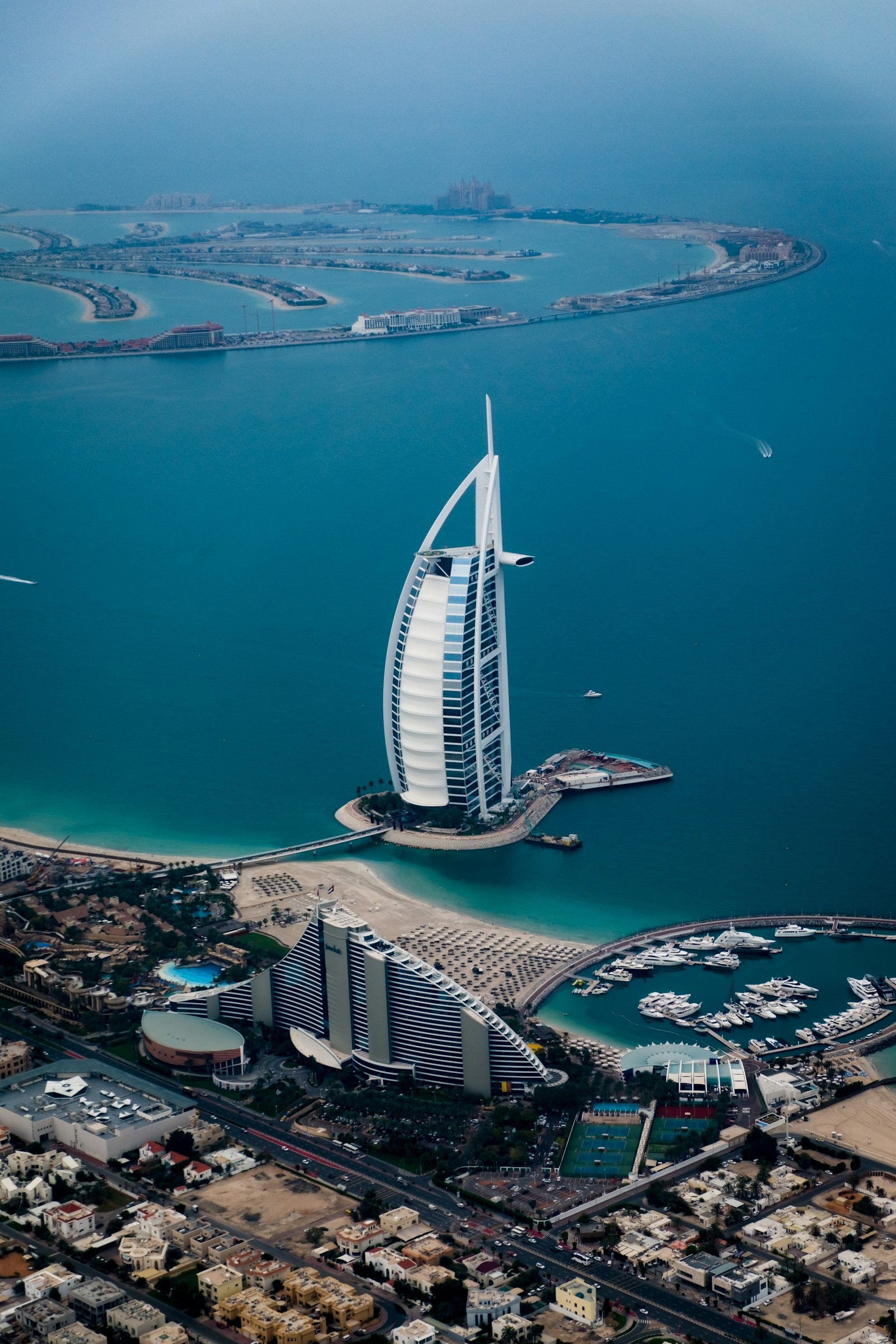
For most of the last decade, Dubai was the only conversation. In 2026, Abu Dhabi has become the harder question. The smart money is no longer on a single emirate. It is on knowing which one solves which problem.
Dubai still moves more transactions, more volume and more headlines. Abu Dhabi has quietly delivered better risk-adjusted returns in three of the last five years. The two markets are converging in some places and diverging sharply in others.
This guide is for buyers and investors who want to understand how each city actually compares in 2026 — across pricing, yields, communities, developer track record, and the kind of life on offer.
The structural difference
Dubai's economy runs on trade, tourism, services and a property-driven population. Abu Dhabi's economy runs on hydrocarbons, sovereign wealth and federal-grade institutions. That is not a small distinction.
Dubai's property market reacts to global capital flows and to the supply pipeline of private developers. Abu Dhabi's reacts much more slowly to either. Aldar dominates the new-build market in the capital. Modon, Imkan and Bloom add the rest. The single-developer concentration is part of the reason Abu Dhabi has lower volatility — and lower upside in the high years.
Dubai had a forty per cent boom from 2021 to 2024. Abu Dhabi went up roughly eighteen per cent over the same window. Through the softer 2025, Dubai pulled back about six per cent on apartments. Abu Dhabi held flat. The trade-off is visible in the chart.
Pricing in 2026: apartments
A two-bedroom apartment in Downtown Dubai trades between AED 2.8 million and AED 4.5 million depending on tower and view. The Burj Khalifa view carries a fifteen to twenty per cent premium. Dubai Marina runs AED 1.8 million to AED 3.2 million for the same product. Business Bay sits between, at AED 1.7 million to AED 2.9 million.
In Abu Dhabi, a two-bedroom on Al Reem Island trades between AED 1.6 million and AED 2.3 million. Saadiyat Island apartments, where the Louvre and the new Guggenheim sit, range from AED 2.3 million to AED 3.6 million. Al Raha Beach is between AED 1.8 million and AED 2.7 million.
On like-for-like specification, Abu Dhabi apartments are around fifteen per cent cheaper than the comparable Dubai product, and twenty to twenty-five per cent cheaper than Downtown specifically. That gap was closer to thirty per cent five years ago.
Pricing in 2026: villas
A four-bedroom villa in Dubai Hills Estate is priced between AED 8.5 million and AED 14 million on the standard plot. Arabian Ranches 3 runs AED 6.5 million to AED 9 million for similar product. Tilal Al Ghaf, the Majid Al Futtaim community, sits between AED 9 million and AED 18 million.
In Abu Dhabi, Saadiyat Beach villas are between AED 12 million and AED 28 million. The Al Jurf coastal villas on the Sahel Al Emarat strip run AED 8 million to AED 22 million. Yas Acres villas, on Yas Island, trade between AED 4.2 million and AED 7.8 million.
Saadiyat Beach is now more expensive than Dubai Hills on a per-square-foot basis. That would have been unthinkable in 2019. The driver is finite beachfront supply on Saadiyat against effectively unlimited inland land in Dubai's outer ring.
Rental yields
Dubai apartments yield between four and a half and seven per cent gross, with Downtown at the lower end and JVC at the higher end. Dubai villas yield between three and five per cent gross. The yield curve has flattened since 2023 because sale prices outran rent growth in most of the prime communities.
Abu Dhabi apartments yield between five and seven per cent gross. Al Reem and Al Raha are at the high end. Saadiyat is at the lower end. Villas in Abu Dhabi yield between four and five and a half per cent gross. The yields are slightly higher on average than Dubai's, and notably more stable year on year.
For an investor optimising for cash yield rather than capital growth, Abu Dhabi has been the cleaner pick for several years. For an investor optimising for capital growth on a five to seven year horizon, Dubai has done more — at the cost of more volatility.
Who lives in each city
Dubai's residents are mostly expatriate, professional, and turnover-heavy. The average tenure of an expat in Dubai is around six to eight years. That shapes the rental market, the school market and the demand for furnished apartments. A unit you buy in Marina is being lived in by someone who arrived two years ago and may leave in three.
Abu Dhabi has a higher share of long-stay expatriates and a higher share of Emirati residents. Average expat tenure is around ten to twelve years. Government, semi-government and energy sector workers settle for the long term. That shapes the family villa demand and stabilises the rental side. The same unit on Al Raha is being lived in by someone who has been there for seven years and signed a three-year extension.
This difference matters for resale. A Dubai apartment changes hands every five to seven years on average. An Abu Dhabi apartment in the same community changes hands every eight to ten years. The Dubai market is more liquid. The Abu Dhabi market is steadier.
Developer track record
Emaar, in Dubai, has the strongest delivery record of any private developer in the Gulf. Twenty-one of its last twenty-five projects handed over within three months of contracted date. Damac and Meraas are more mixed. Sobha and Nakheel sit in between.
Aldar dominates Abu Dhabi the way Emaar dominates Dubai, with a similar discipline on delivery. Aldar's last eighteen project handovers ran on time or within four weeks. Aldar's service charges run consistently lower than Meraas or Damac equivalents — typically AED 8 to AED 14 per sq ft on a Saadiyat or Yas product, against AED 16 to AED 22 for Bluewaters or City Walk in Dubai.
For off-plan buyers, Abu Dhabi's narrower developer field is a feature, not a bug. The buyer is making one or two developer judgements, not a dozen. The execution risk is structurally lower.
The schools and family question
Dubai has more KHDA-rated Outstanding and Very Good schools than Abu Dhabi. The premium British and American campuses are concentrated on the Sheikh Zayed Road spine. Choice is wider. The downside is competition for places.
Abu Dhabi's school market is smaller but improving fast. Cranleigh Abu Dhabi on Saadiyat, Repton Abu Dhabi, Cranleigh's sister campus and Brighton College Abu Dhabi cover the top of the British market. The American Community School and the German International School cover the international curricula. Inventory at strong schools is tighter than the buyer expects.
For a family with multiple children, both cities now work. Dubai still wins on optionality. Abu Dhabi wins on commute distance — almost every premium school in the capital is within fifteen minutes of the major family communities.
Lifestyle and pace
Dubai is bigger, louder, faster and more international. There is a restaurant opening every weekend. There is always a new community launching. There is always a buyer for whatever you want to sell. The trade-off is the pace itself — and the traffic — which some buyers love and some buyers eventually leave for.
Abu Dhabi is quieter, greener, more residential and more institutional. The waterfront is less monetised. The corniche is for walking, not for hotel lounges. The cultural district on Saadiyat — Louvre, Zayed National Museum, the coming Guggenheim — has changed the city's centre of gravity in a way that is hard to overstate.
The cities serve different buyer psychologies. The same family that loves Marina at thirty often prefers Saadiyat at forty-five.
Off-plan: where the new supply is
Dubai is mid-cycle on its current off-plan wave. Palm Jebel Ali, Dubai Creek Harbour, Damac Islands, Emaar South and the MBR City expansion all have substantial pipeline through 2028 and 2029. There is real concern in some quarters that 2027 brings a delivery glut, particularly in apartments outside the prime communities.
Abu Dhabi is earlier in its cycle. Aldar's Yas Park Gate, Saadiyat Lagoons, Saadiyat Reserve and the Al Hudayriat masterplan are still launching. Inventory is being absorbed by long-stay residents and federal-sector buyers rather than flipped. There is no comparable concern about a 2027 oversupply in Abu Dhabi prime.
For off-plan buyers, the 2026 read is that Abu Dhabi has cleaner risk-reward at the launch level. Dubai's better off-plan opportunities now require careful tower selection and a healthy scepticism of the second and third tier developer projects.
The honest case for Dubai
If the goal is capital growth, liquidity and optionality, Dubai is the choice. The number of buyers, the number of resale channels, the spread of communities and the speed at which a position can be entered and exited are all higher in Dubai. The currency of the market is movement.
The honest case for Abu Dhabi
If the goal is yield, stability, long-term occupancy and a slower lifestyle, Abu Dhabi is the choice. The market is shallower but cleaner. The developer concentration reduces execution risk. The communities are designed for families who plan to stay rather than for investors who plan to flip.
Common buyer mistakes
The first mistake is treating Abu Dhabi like a cheaper Dubai. It is not. Saadiyat Beach is more expensive than Dubai Hills. Al Reem trades at Marina prices on the best towers. Pricing the capital as a discount play leads to bad selections.
The second is buying in the wrong emirate for the wrong reason. Investors looking for short-let income should not be buying in Abu Dhabi. The short-let licensing regime is narrower, the demand pool is smaller, and the operator network is thinner. Long-term yield investors should not be over-indexing on Downtown Dubai. The yield case there is poor and has been for years.
The third is buying both cities through the same agent without acknowledging the structural differences. The two markets have different valuation cycles, different developer dynamics, different lease structures and different tax treatment on certain transactions. The team that knows Marina cold may not know Al Reem at all.
What 2026 looks like from here
Dubai is likely to be flat to slightly up in 2026, with strength in prime villas and softness in mass-market apartments outside the established communities. The 2027 supply wave is the variable. Buyers should be selective on towers and developers and patient on closing.
Abu Dhabi is likely to be up four to seven per cent across most communities in 2026, with the strongest movement in Saadiyat and Yas. The Guggenheim opening in late 2026 will be a real catalyst. The federal sector is hiring. The expat tenure curve is lengthening.
For a buyer with one position to make, the answer is the city that matches the use case. For an investor with two or three positions, owning both cities is now the cleanest UAE strategy. The diversification benefit between Dubai apartments and Abu Dhabi villas is the most underrated trade in the region.
How to start
The right sequence is to be clear on what the position is for. Yield, capital growth, lifestyle, residency, school catchment, or some weighted blend. The answer narrows the emirate, the community, the product type and the developer in that order. The reverse order — falling in love with a unit first and reverse-engineering the use case — is how the worst purchases get made.
If you want a curated comparison of current Dubai and Abu Dhabi inventory across the communities discussed here, with realistic yield and growth assumptions for each, contact our team for a private list.